




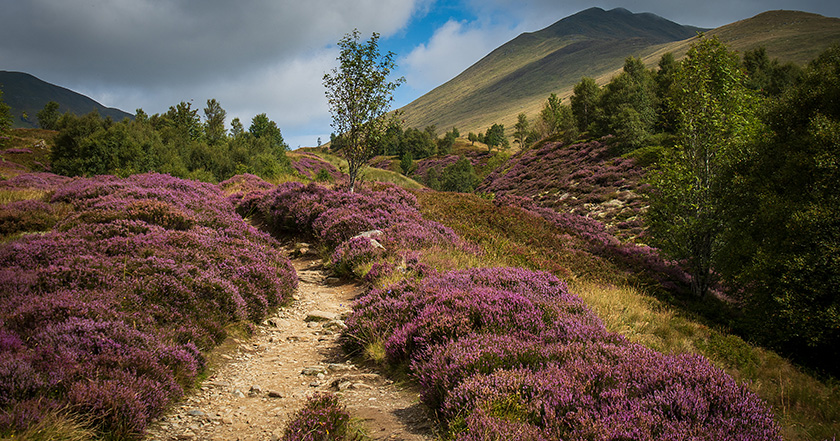
For many landowners and occupiers, muirburn remains an important part of managing Scotland’s moorland. When carried out properly, the controlled burning of heather, grasses and other moorland vegetation can encourage fresh growth, support game and wildlife management, and reduce the build-up of vegetation that can fuel uncontrolled wildfires. It is also a practice that sits at the centre of competing public policy priorities, including biodiversity, peatland protection, carbon storage, wildfire resilience, rural employment and sporting land use.
The Wildlife Management and Muirburn (Scotland) Act 2024 (“2024 Act”) introduces a significant shift in that balance. From 15 September 2026, it will be an offence to carry out muirburn anywhere in Scotland without a licence. NatureScot, which is responsible for administering the new regime, opened its application process in July 2026.
What is muirburn?
The 2024 Act defines muirburn as the setting of fire to, or the burning of, any heath or muir. In practice, that captures controlled burning on open moorland habitats, including areas dominated by heather and moorland grasses. The new regime applies to all land across Scotland, regardless of its underlying use.
The new licensing requirement and process
A muirburn licence will be required before any muirburn can lawfully be undertaken. The licence holder must be the landowner or occupier and must have the legal right to carry out muirburn for the duration of the licence. NatureScot currently permits applications for licences of up to five years.
The application must identify:
- The applicant and details of at least one person who has completed an approved muirburn training course. Evidence of course completion and details of the trained individual(s) must be included in the application.
- The land to which the licence will relate. It is understood that the application system will allow applicants to identify proposed burn areas, however it is not yet clear if the licence obtained will apply only to those specific areas or more widely across the land owned or occupied by the applicant. The presence of peat is expected to affect how licence areas are drawn.
- The purpose or purposes for which the licence is sought. The purposes for which a licence may be granted vary depending on whether the land is peatland or non-peatland (see further below).
Where muirburn is carried out without a valid licence, in breach of licence conditions, or where false information is knowingly or recklessly provided in an application, the licence holder may face criminal liability, with penalties of up to six months’ imprisonment and/or a fine of up to £5,000.
Peatland and non-peatland: why the distinction matters
The 2024 Act defines peatland as land with peat layers exceeding 40 centimetres in depth. All other land is considered “non-peatland”.
On non-peatland, muirburn may be licensed for purposes including managing moorland game or wildlife habitat, improving grazing potential, conserving, restoring, managing or enhancing the natural environment, wildfire prevention, research and training.
On peatland, the permitted purposes are narrower and are limited to restoring the natural environment, wildfire prevention, research and training. A licence will only be granted where NatureScot considers muirburn to be necessary for the specified purpose. Originally, NatureScot also had to be satisfied that no other method of vegetation control was practicable before granting a peatland licence, but this requirement was removed by the Natural Environment (Scotland) Act 2026.
Applications must specify whether the land to be licensed is peatland or non-peatland, and NatureScot has published an interactive map to assist with that assessment. The map identifies three categories:
- Peatland – no survey is required here unless the applicant disagrees with the classification.
- Non-peatland – where a licence is sought for a non-peatland purpose, a walkover survey must be carried out to confirm this classification.
- Uncertain peatland – if the licence application is for a non-peatland purpose, the applicant must undertake a peat depth survey.
Applicants must carry out surveys in accordance with NatureScot guidance and upload the results alongside their application. NatureScot acknowledges that peat surveys may take time, one of the reasons the licensing regime’s implementation was delayed from its original start date of September 2025. It has also stated that licence amendments will be possible where additional survey data becomes available in later years.
Muirburn Code
Every muirburn licence will include a condition requiring the licence holder to “have regard” to the Muirburn Code.
Prepared by NatureScot, the code is intended to set out how the muirburn should be undertaken safely and appropriately. In practical terms, this includes observing the permitted muirburn season (now running from 15 September to 31 March), ensuring that burns are carried out by appropriately trained individuals, and following the Code’s requirements and good-practice guidance on matters such as, timing, safety precautions, protection of sensitive habitats and species, burn size and frequency, and notification of neighbouring owners and occupiers.
Preparing for the new regime
Landowners and occupiers who intend to continue using muirburn should ensure they are ready for the forthcoming changes. In particular, they should:
- review whether approved training has been completed for all personnel to be involved in muirburn;
- assess whether any areas they would like to licence fall within NatureScot’s peatland mapping, to allow sufficient time to undertake peatland surveys or tailor their licence application appropriately; and
- review any additional information that may be required to accompany the licence application e.g. wildfire risk assessments and maps
- ensure they have processes in place for recording details of muirburn undertaken, as annual returns must be made to NatureScot
What the changes mean in practice
The 2024 Act does not prohibit muirburn. Rather, it places the practice within a formal licensing framework, bringing greater scrutiny to where, why and how burning is undertaken. For responsible land managers, the challenge will be demonstrating that muirburn is planned, proportionate and properly controlled. Recent wildfires in Scotland have underlined that inaction also carries risks, reinforcing the importance of giving land managers practical tools to reduce fuel loads and manage wildfire risk.
For landowners and occupiers, the immediate priority is understanding whether the peatland categorisation of their land will affect their ability to burn as they might have planned in the past, and ensuring the necessary training requirements are in place to enable licence applications to be submitted.
The success of the new licensing regime will depend on striking a balance: being robust enough to achieve the environmental policy aims while remaining practical for those managing Scotland’s land on a day-to-day basis.